

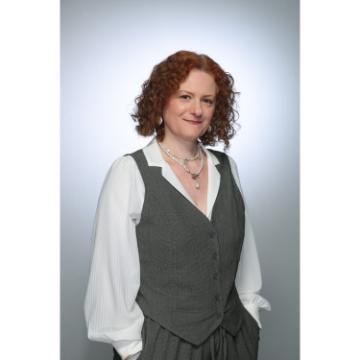
About
Associate Professor, Chair of the Doctoral Committee.
Publications
- Associative anaphora in Arabic: examples from the Qurʾān, Dror, Y., 2026, (Accepted/In press) In: Lodz Papers in Pragmatics.
- A Discourse Analysis of Texts written during the Nahḍa: A Case Study of al-Jinān, Dror, Y. & Zachs, F., Mar 2025, In: International Journal of Arabic Linguistics. 11, p. 40-64
- OCCURRENCES OF WĀW EXPLICATIVUM IN QUR’ĀNIC HENDIADYS, Dror, Y., 2025, In: Museon. 138, 3-4, p. 451-472 22 p.
- The mā yaf‛alu construction in the Arabic grammatical tradition: evidence from the Qur’ān, Dror, Y., 2025, In: Ancient Near Eastern Studies. 62, p. 113-131 19 p.
- The Grammar of Emotion Verbs in the Qur'ān: A Case Study of the verb Xāfa, Dror, Y., Saied, S. & Amara, B., 2024, In: Journal of Semitic Studies. 69, 2, p. 869-896 28 p.
- Qurʾānic Exceptive Phrases: The Case of the ʾin...ʾillā Construction, Dror, Y. & Bader Eddin, E., 2024, In: Zeitschrift der Deutschen Morgenlandischen Gesellschaft. 174, 1, p. 133-150 18 p.
- Use of the Term fāʾida in Qurʾānic Exegesis, Dror, Y., 2024, In: al-Karmil: Studies in Arabic language and literature. 45, 1-2, p. 116-137
- Applying Discourse Analysis to Define the Stylistic Features of Qurʾānic Genres, Dror, Y., 1 Dec 2022, In: Orientalia Suecana. 71, p. 141–160
- Who believed, who believes and the believers –the aspectual differences of such structural types in the Qurʾān, Dror, Y. & Bader Eddin, E., 2022, In: British Journal of Middle Eastern Studies. 49, 4, p. 652-674 23 p.
- DOES AN AL-TAFSĪRIYYA REALLY EXIST IN THE QURʾĀN?, Eddin, E. A. B. & Dror, Y., 2022, In: Jerusalem Studies in Arabic and Islam. 2022, 53, p. 63-91 29 p.
- The Use of Cognitive Verbs as a Strategy for Expressing Subjectivity and Intersubjectivity in the Qurʾān, Dror, Y., 2022, Israel Oriental Studies. Leiden, The Netherlands: Brill, Vol. 21. p. 333-358
- Qurʾānic Rhetorical Questions: Their Identification and Communicative Function, Dror, Y., Dec 2021, In: Semitica. 63, p. 377-408
- Verbs of saying in the qurʾān: The case of qāla, Dror, Y., 2021, In: Al-Qantara. 42, 1, e03.
- GENERICITY IN THE QUR'ĀN, Dror, Y., 2021, In: Journal Asiatique. 309, 1, p. 33-46 14 p.
- The Terms manzila, maǧrā, mawḍiʿ, mawqiʿ, makān and maqām in Sībawayhi's Book, Dror, Y. & Jabarin, A., 2021, In: Zeitschrift fur Arabische Linguistik. 2021, 74, p. 37-60 24 p.
- Types of Syntactic Equivalence in the Qurʼānic Translations, Dror, Y., 15 Dec 2020, In: Hikma. 19, 2, p. 91-116 26 p.
- The Conjunction ḥayṯu in Modern Written Arabic: A Feature of Linguistic Simplification?, Dror, Y., 5 Aug 2020, In: Studi Classici e Orientali. 66, p. 17-35 19 p.
- The Muḥīṭ al-Muḥīṭ Dictionary: The Transition from Classical to Modern Arabic Lexicography, Zachs, F. & Dror, Y., 1 Jan 2020, In: Journal of Arabic and Islamic Studies. 20, p. 15-32 18 p.
- Reciprocity in the Qur'ān: Toward a syntactic and semantic analysis, Dror, Y., 2020, In: Museon. 133, 3-4, p. 471-492 22 p.
- Al-Bustanı’ s approach to the Arabic language: From theory to practice, Zachs, F. & Dror, Y., 1 Jul 2019, In: Journal of the Royal Asiatic Society. 29, 3, p. 393-413 21 p.
- Is wa a Polysemous Connective? A Case Study of the Qur'anic waw al-'atf, Dror, Y. & Borrmann, K., 2019, In: Journal for Semitics. 28, 2, p. 1-23 23 p.
- The Scope of the Focus Particle ʾInnamā in the Qurʾān, Borrmann, K. & Dror, Y., 28 Dec 2018, In: Advances in language and literary studies. 9, 6, p. 200-211 12 p.
- Occurrences of the Term Saʻat al-Kalām in Arabic Grammatical Descriptions, Dror, Y. & Jabarin, A., 15 Nov 2018, In: Journal of Arabic Linguistics Tradition. 16, p. 1-20 20 p., 1.
- The Structure of Legal Passages in the Qur’ān, Dror, Y., Aug 2018, In: International Journal for the Rule of Law, Courtroom Procedures, Judicial Linguistics & Legal English. 2, 1, p. 73-107 34 p., 4.
- Grammatical issues integrated with quranic exegesis and their impact on meaning: A critical study of the commentary on sūrat al-nisā, Dror, Y., 2018, In: AlBayan. 16, 2, p. 114-138 25 p.
- Parenthetical Clauses in the QUR'ĀN, Dror, Y., 2018, In: Research in Language. 16, 4, p. 429-449 21 p.
- The discourse particle’ammā in the Qur’ān, Dror, Y., 2018, In: Ancient Near Eastern Studies. 55, p. 51-75 25 p.
- על דרכי הפעולה של יהודים במרחב הציבורי המוסלמי במרוקו,
Translated title of the contribution :The Modes of Action of Jews in the Muslim Public Sphere in Morocco – Linguistic and Pragmatic Analysis of Legal Texts - Cohesive substitution in the Quran, Dror, Y., 1 Dec 2017, In: Lingua Posnaniensis. 59, 2, p. 41-52 12 p.
- Grammatical Parallelism in the Qurʼān, Dror, Y., 18 Oct 2017, In: Archiv Orientalni. 85, 2, p. 165-190 26 p.
- ʾan al-maṣdariyya in the Qurʾān, Dror, Y., 2017, In: Mediterranean Language Review. 24, p. 85-111 27 p.
- The Perfective Indication of kāna in Clauses of the kāna llāhu ʻalīman raḥīman Type, Dror, Y., 2017, In: International Journal of Arabic Linguistics. 3, 1, p. 34-56 23 p.
- The Demonstrative Particle ḏālika and its Anaphoric Function in the Qurʾān, Dror, Y., 26 Apr 2016, In: Studia Orientalia Electronica. 4, p. 131-149 19 p.
- Collective Nouns in the Qur'Ān: Their Verbal, Adjectival and Pronominal Agreement, Dror, Y., 1 Mar 2016, In: Journal of Semitic Studies. 61, 1, p. 103-137 35 p.
- Collective Nouns in Journalistic Arabic, Dror, Y., 1 Mar 2016, In: Bulletin de l’Académie Belge pour l’Étude des Langues Anciennes et Orientales. 5, p. 301-329 29 p.
- The Linguistic Features of the Qur'anic Narratives, Dror, Y., 2016, Lit Publisher. 91 p. (Wiener Offene Orientalistik; vol. 12)
- A Definition of the Term, ḥikāyat ḥāl māḍiya, (the Historical Present) in Light of Qur’ānic Exegesis, Dror, Y., 2016, In: Folia Orientalia. 52, p. 145-169 25 p.
- The Syntactic Structure of the Relative Clauses in Arabic, Dror, Y., Jan 2016, In: Zeitschrift für Arabische Linguistik. 64, p. 69-86 18 p.
- Annexation ('iḍāfa) in Arabic Grammatical Thought, Dror, Y., 2016, In: Journal Asiatique. 304, 2, p. 179-191 13 p.
- The Internal Passive and the Periphrastic Passive in Journalistic Modern Standard Arabic, Dror, Y., 31 May 2015, In: Athens Journal of Philology. 2, 2, p. 109-122 14 p.
- A definition of the term ʾiḫtiṣāṣ in Arabic, Dror, Y., 1 Jan 2015, In: Journal of Oriental and African Studies. 24, p. 75-85 11 p.
- The adversative function of the particle ṯumma in light of the Qurʾānic translations, Dror, Y., 1 Jan 2015, In: Semitica. 57, p. 273-293 21 p.
- Is each particle in the Qur'a¯n translatable? The case of wa¯w l-isti'na¯f preceding the fawa¯sil, Dror, Y., 2015, In: Babel. 61, 1, p. 22-42 21 p.
- Adjectival Agreement in the Qurʾān, Dror, J., 30 Apr 2014, In: Bulletin d'Études Orientales. 62, p. 51-75 25 p.
- Die Wortstellung des Subjekts „Gott“ im Koran, Dror, Y., 1 Mar 2014, In: Journal of Arabic and Islamic Studies. 14, p. 63–86 24 p.
- The Internal Passive in the Arabic Grammatical Tradition, Dror, Y., 2014, In: Annali (Istituto Universitario Orientale). 74, p. 47-61 14 p.
- The Syntactic Position of Prepositional Phrases in the Qur'ān, Dror, Y., 2013, In: Wiener Zeitschrift für die Kunde des Morgenlandes. 103, p. 201-220 20 p.
- The suffix-conjugation designating eschatological events in the Qur'ān, Dror, Y., 1 Jan 2013, In: Bibliotheca Orientalis. 70, 1-2, p. 42-52 11 p.
- The Use of the Imperfect in the Qur'an: Examination of the Habitual Present, Y., D., 1 Jan 2012, In: Journal for Semitics. 21, 1, p. 66-90 25 p.
- Classification of the Independent Personal Pronoun in the Qur’ān, Dror, Y., 2012, In: RomanoArabica. 12, p. 83-105 23 p., 6.
Education
Research Areas
Classical and Modern Arabic Syntax
My primary area of specialization is Quranic syntax. My research focuses on the syntax of the Quran and explores topics such as tense and aspect in the Quran, linguistic analysis of different discourse types in the Quran, syntax in Quranic exegesis, and the role of particles in the Quran, among other subjects.
I identify as a functional linguist. This means that my research is primarily concerned with questions such as: Why is a particular structure used? What function does it serve in discourse? Why is one structure chosen over another, structurally equivalent alternative?
My research methodology combines several approaches, including the writings of Arab grammarians, discourse analysis, Quranic exegesis, Quran translations, modern linguistic theories, and comparisons with parallel structures in Hebrew in general and Biblical Hebrew in particular.