

About
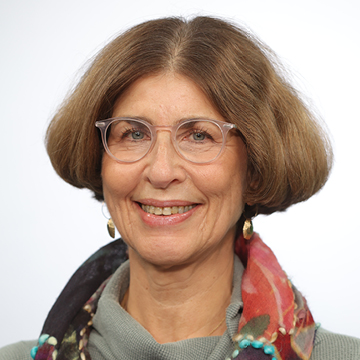
Yael Maschler is Professor of Linguistics at the Department of Hebrew Language, University of Haifa. Her research interests include Interactional Linguistics, Emergent Grammar, and the grammar-body interface in social interaction. Her research explores grammaticization – the crystallization of grammatical structure from interaction. She studies the ways resources from both verbal and embodied modalities – linguistic constructions, prosody, gaze, facial expression, gesture, body posture and movement – are mobilized to accomplish social actions. She focuses on spoken Hebrew, often comparing it to other languages, with the goal of contributing to the field of Pragmatic Typology. Her studies are based on audio- and video-recordings of naturally-occurring conversation, prosodically coded and carefully transcribed, constructing the Haifa Corpus of Spoken Hebrew with her students in her lab. She is currently principal investigator of the ISF-funded project “Between Conjunction and Discourse Marker: The Emergent Grammar of Hebrew Adverbial Clauses in a Multimodal Cross-Linguistic Perspective”.
Publications
- Tracing the semantic development of Hebrew clicks, Ben-Moshe, Y. & Maschler, Y., 2 Nov 2026, (E-pub ahead of print) In: Studies in Language.
- The Haifa Multimodal Corpus of Spoken Hebrew, Maschler, Y., Polak-Yitzhaki, H., Aghion, G., Fofliger, O., Wildner, N., Ben Moshe, Y. M., Lagil, R., Saar, S., Inbar, A., Geva, Y. & Kojokaro, K., 2026
- The Haifa Corpus of Spoken Hebrew, Maschler, Y., Polak-Yitzhaki, H., Fishman, S., Miller Shapiro, C., Goretsky, N., Aghion, G., Fofliger, O., Ben Moshe, Y. & Geva, Y., 2026
- Insubordination in interaction: The case of Hebrew ironic ki ‘because’-clauses, Inbar, A. & Maschler, Y., 2026, (Accepted/In press) In: Interactional Linguistics.
- Teasing via the [lo, ki ‘no, because’ + ironic utterance] structure in Hebrew talk-in-interaction, Inbar, A. & Maschler, Y., Oct 2025, In: Discourse Studies. 27, 5, p. 759-786 28 p.
- That’s what I need: A multimodal study of Hebrew ‘Reversed Pseudo-Clefts’, Maschler, Y. & Polak-Yitzhaki, H., Feb 2025, In: Linguistic Typology at the Crossroads. 5, 2, p. 123-160 38 p.
- דקדוק וגוף: מבט מולטימודאלי על הידקדקותה של התבנית 'אני לא מבין/ה',
Translated title of the contribution :GRAMMAR AND THE BODY: A MULTIMODAL STUDY OF THE GRAMMATICIZATION OF HEBREW ‘ANI LO MEVIN/A ‘I DON’T UNDERSTAND' - Hebrew clicks: From the periphery of language to the heart of grammar, Ben-Moshe, Y. M. & Maschler, Y., Aug 2024, In: Journal of Pragmatics. 229, p. 19-39 21 p.
- Request for confirmation sequences in Hebrew, Ben-Moshe, Y. M. & Maschler, Y., 1 Jan 2024, In: Open Linguistics. 10, 1, 20240028.
- From lack of understanding to heightened engagement: A multimodal study of Hebrew ′aTA LO MEVIN 'You don't understand', Polak-Yitzhaki, H. & Maschler, Y., 1 Nov 2023, In: Intercultural Pragmatics. 20, 5, p. 521-555 35 p.
- Pseudo-clefts: An interactional analysis across languages, Maschler, Y., Lindström, J. & De Stefani, E., Aug 2023, In: Lingua. 291, 103538.
- Shared Knowledge as an Account for Disaffiliative Moves: Hebrew ki ‘Because’-Clauses Accompanied by the Palm-Up Open-Hand Gesture, Inbar, A. & Maschler, Y., 2023, In: Research on Language and Social Interaction. 56, 2, p. 141-164 24 p.
- Pseudo-cleft-like structures in Hebrew and French conversation: The syntax-lexicon-body interface, Maschler, Y. & Pekarek Doehler, S., 1 Dec 2022, In: Lingua. 280, 103397.
- Pseudo-Clefts from A Comparative Pragmatic Typological Perspective, De Stefani, E. (Editor), Lindström, J. (Editor) & Maschler, Y. (Editor), 1 Jan 2022, In: Lingua. 266, 6.
- Emergent Syntax for Conversation: Clausal Patterns and the Organization of Action, Maschle, Y. (Editor), Pekarek Doehler, S. (Editor), Lindström, J. (Editor) & Keevallik, L. (Editor), Feb 2020, Amsterdam/Philadelphia: John Benjamins Publishing Company. 351 p. (Studies in Language and Social Interaction; vol. 32)
- The insubordinate - subordinate continuum: Prosody, embodied action, and the emergence of Hebrew complex syntax, Maschler, Y., 2020, Emergent Syntax for Conversation. Clausal patterns and the organization of action. Maschler, Y., Doehler, S. P., Lindstrom, J. & Keevallik, L. (eds.). John Benjamins Publishing Company, p. 87-125 39 p. (Studies in Language and Social Interaction; vol. 32).
- Constructing a genre: Hebrew ('ani) lo yode'a/lo yoda'at '(I) don't know' on Israeli political radio phone-ins, Maschler, Y. & Dori-Hacohen, G., 28 Aug 2018, In: Text and Talk. 38, 5, p. 575-604 30 p.
- מפסוקית ראשית לסמן שיח פרוטוטיפי: התבנית '(אני) לא יודע/ת' ממבט טיפולוגי פרגמטי,
Translated title of the contribution :From matrix clause to prototypical discourse marker: The construction ('ani) lo yode'a / yoda'at ‘(I) dunno (M/F)’ from a pragmatic typological perspective - The emergence of Hebrew loydea / loydat (‘I dunno masc/fem’) from interaction, Maschler, Y., 2017, Pragmatic Markers, Discourse Markers and Modal Particles: New perspectives. Fedriani, C. & Sansó, A. (eds.). Amsterdam/Philadelphia: John Benjamins Publishing Company, p. 37–69 33 p. 1. (Studies in Language Companion Series; vol. 186).
- Grammar and Negative Epistemics in Talk-in-Interaction: Cross-Linguistic Studies, Lindström, J. (Guest editor), Maschler, Y. (Guest editor) & Pekarek Doehler, S. (Guest editor), 1 Dec 2016, In: Journal of Pragmatics. 106, p. 72-202 130 p.
- NU / NÅ: A Family of Discourse Markers Across the Languages of Europe and Beyond, Auer, P. (Editor) & Maschler, Y. (Editor), 24 Oct 2016, Berlin: Walter de Gruyter. 517 p. ( linguae & litterae; vol. 58)
- The family of NU and NÅ across the languages of Europe and beyond: Structure, function, and history, Auer, P. & Maschler, Y., 24 Oct 2016, NU / NÅ: A Family of Discourse Markers Across the Languages of Europe and Beyond. Auer, P. & Maschler, Y. (eds.). Berlin: De Gruyter, p. 1-47 47 p. (Linguae & Litterae; vol. 58).
- Hebrew nu: Grammaticization of a Borrowed Particle from Synchronic and Diachronic Perspectives, Maschler, Y. & Dori-Hacohen, G., 2016, NU/NÅ: A Family of Discourse Markers across the Languages of Europe and Beyond. Auer, P. & Maschler, Y. (eds.). Berlin: Walter de Gruyter, p. 162-212 51 p. (Linguae & Litterae; vol. 58).
- Word Order in Time: Emergent Hebrew (Ns)V/VNs Syntax, Maschler, Y., 20 Mar 2015, Temporality in Interaction. Deppermann , A. & Günthner , S. (eds.). Amsterdam: John Benjamins Publishing Company, p. 201-236 36 p. (Studies in Language and Social Interaction; vol. 27).
- Discourse Markers: Language, Meaning, and Context, Maschler, Y. & Schiffrin, D., 1 Jan 2015, The Handbook of Discourse Analysis, Second Edition: Volumes 1-2. wiley, Vol. 1. p. 189-221 33 p.
- Formulations on Israeli political talk radio: From actions and sequences to stance via dialogic resonance, Nir, B., Dori-Hacohen, G. & Maschler, Y., Aug 2014, In: Discourse Studies. 16, 4, p. 534-571 38 p.
- תבניות בזמן: סדרי המילים שבין הנושא לנשוא בשיח נרטיבי עברי דבור,
Translated title of the contribution :Constructions in time: On subject-predicate words orders in spoken narrative Hebrew discourse - Discourse Marker: Modern Hebrew, Haifa), Y. M., 2013, Encyclopedia of Hebrew Language and Linguistics. Khan, G. (ed.). Leiden: Brill, Vol. I. p. 758-763
- סמן השיח 'נו' בתכניות השיחה הציבורית ברדיו,
Translated title of the contribution :The discourse marker nu in public radio phone-in programs - From sequential to affective discourse marker: Hebrew Nu on Israeli Political Phone-In Radio Programs, Maschler, Y. & Dori-Hacohen, G., Aug 2012, In: Discourse Studies. 14, 4, p. 419-455 37 p.
- על התהוותן של תבניות מן השיח: משפחת פסוקיות הזיקה,
Translated title of the contribution :On The Emergence of Constructions from Discourse: The Case of the Family of Relative Clauses - On the emergence of adverbial connectives from Hebrew relative clause constructions, Maschler, Y. & Shaer, S., 2011, Constructions: Emerging and Emergent. Auer, P. & Pfänder, S. (eds.). Berlin: De Gruyter, p. 293-334 42 p. (linguae & litterae; vol. 6).
- דברי המפגשים השנתיים ה-25 (17 בפברואר 2009) וה-26 (8 בפברואר 2010) במלאת עשור למותו של חיים רוזן, מייסד החוג הישראלי לבלשנות,
Translated title of the contribution :Proceedings of the 25th and 26th Annual Meetings of the Israeli Linguistic Society 2009-10 - Morpho-syntactic resources for the organization of same-turn self-repair: Cross-linguistic variation in English, German and Hebrew, Fox, B., Maschler, Y. & Uhmann, S., 1 Jan 2009, In: Gesprächsforschung. 10, p. 245-291 47 p.
- מערכת סמני השיח של העברית היום-יומית הדבורה, משלר, י., 2009, In: בלשנות עברית: כתב-עת לבלשנות עברית תיאורית, חישובית ויישומית. 62-63, p. 99-129 31 p.
- Metalanguage in interaction: Hebrew discourse markers, Maschler, Y., 2009, Amsterdam: John Benjamins Pub. Co. 258 p. (Pragmatics & beyond ; 181 lat)
- Discourse Markers, Maschler, Y., 1 Jan 2008, The International Encyclopedia of Communication. Oxford: wiley, p. 1364-1366
- הורס את ההפתעה,
Translated title of the contribution :Spoils the surprise: Concerning Moshe Sakal’s Review of Nemirovsky’s Suite Française - Accepting while Shifting: The Discourse Marker tov ('okay, fine', lit. 'good') in Israeli Hebrew Talk-in-Interaction, Maschler, Y., 1 Jan 2004, In: Texas Linguistic Forum. p. 216-228
- Interjections as discourse markers: Comment on ‘The meanings of interjections in Q’eqchi’ Maya: from emotive reaction to social and discursive action’ by Paul Kockelman, Maschler, Y., 2003, In: Current Anthropology. 44, 4, p. 481-482 24 p.
- Discourse Markers in Bilingual Conversation - Special issue, Maschler, Y. (Editor), 2000, In: International Journal of Bilingualism. 4, 4, p. 437-561
- Rotse lishmoa keta? 'Wanna Hear Something Weird/Funny [lit. 'a Segment']?': The Discourse Markers Segmenting Israeli Hebrew Talk-in-Interaction, Maschler, Y., 1998, Discourse Markers: Descriptions and theory. Jucker, A. H. & Ziv, Y. (eds.). Amsterdam: John Benjamins Publishing Company, p. 13-59
- On the Transition from Code Switching to a Mixed Code, Maschler, Y., 1998, Code Switching in Conversation. Auer, P. (ed.). London: Routledge, p. 125-149
- Discourse markers at frame shifts in Israeli Hebrew talk-in-interaction, Maschler, Y., 1997, In: Pragmatics. 7, 2, p. 183-211 29 p.
- Book review: Eliezer Ben-Rafael, Language, Identity and Social Division: The Case of Israel, Maschler, Y., 1996, In: Language in Society. 25, 3, p. 476–480
- Competing motivations for iconic contrast in Hebrew-English bilingual conversation, Maschler, Y., 1995, In: Texas Linguistic Forum. 34, p. 29-39 11 p.
- Structural and pragmatic contrasts shaping an emergent bilingual grammar, Maschler, Y., 1995, Proceedings of the European Summer School on Code-Switching and Language Contact. p. 142-152
- Metalanguaging and discourse markers in bilingual conversation, Maschler, Y., Jun 1994, In: Language in Society. 23, 3, p. 325-366 42 p.
- ‘Appreciation ha'araxa o ha’ aratsa?’ [‘valuing or admiration’]: Negotiating contrast in bilingual disagreement talk, Maschler, Y., 1994, In: Text. 14, 2, p. 207-238 32 p.
- Iconicity in Discourse: The Story of Echo, Maschler, Y., 1993, In: Poetics Today. 14, 4, p. 653-690
Education
- 2000 Joined the Department of Hebrew Language, University of Haifa
- 1993–1994 Fellowship of the Ministry of Absorption in Science (vatat), Department of Communication, Hebrew University of Jerusalem
- 1991–1992 Lady Davis Post-doctoral Fellowship, Department of Communication, Hebrew University of Jerusalem
- 1988–1992 Assistant Professor of Hebrew Linguistics, University of Utah, Salt Lake City
- 1983–1988 Ph.D. with distinction, Linguistics, University of Michigan, Ann Arbor
- 1981–1983 B.A. magna cum laude, Linguistics, Hebrew University of Jerusalem
- 1979–1981 B.Sc. Mathematics, Hebrew University of Jerusalem
Academic Background
Research Areas
- Interactional Linguistics
- Emergent Grammar
- Discourse and Grammar
- Multimodal Interaction Analysis
Awards
Research Grants
- 2024–2028 Research grant, Israel Science Foundation (ISF), Principal Investigator: Between Conjunction and Discourse Marker: The Emergent Grammar of Hebrew Adverbial Clauses in a Multimodal Cross-Linguistic Perspective
- 2020–2024 Research grant, Israel Science Foundation (ISF), Principal Investigator: From emergent complex syntax to discourse markerhood: The Hebrew grammar-body interface in a cross-language comparison
- 2019–2025 Research grant, German Research Foundation (DFG), Co-Investigator: Interactional Linguistics – Discourse particles from a cross-linguistic perspective
- 2019 Research grant, Finnish Center of Excellence in Research on Intersubjectivity in Interaction, Department of Finnish, Finno-Ugrian, and Scandinavian Studies, University of Helsinki, Helsinki, Finland: A cross-linguistic and multimodal study of pseudo-clefts
- 2017 Research grant, Freiburg Institute for Advanced Studies (FRIAS), Albert-Ludwigs-Universität, Freiburg, Germany: The Emergent Grammar of Clause-Combining in Spoken Interaction – Toward a Pragmatic Typology
- 2016–2020 Research grant, Israel Science Foundation (ISF), Principal Investigator: The Emergent Grammar of Clause-Combining from a Cross-Linguistic Perspective – A Contribution to Pragmatic Typology
- 2016 Research grant, Finnish Center of Excellence in Research on Intersubjectivity in Interaction, Department of Finnish, Finno-Ugrian, and Scandinavian Studies, University of Helsinki, Helsinki, Finland: Negative epistemics
- 2015 Research grant, Finnish Center of Excellence in Research on Intersubjectivity in Interaction, Department of Finnish, Finno-Ugrian, and Scandinavian Studies, University of Helsinki, Helsinki, Finland: The Emergent Grammar of Hebrew Clause-Combining
- 2014 Research grant, Freiburg Institute for Advanced Studies (FRIAS), Albert-Ludwigs-Universität, Freiburg, Germany: Nu and its Relatives: A discourse marker across the languages of Europe and beyond
- 2012–2016 Research grant, Israel Science Foundation (ISF), Principal Investigator: The Emergent Grammar of Hebrew Clause-Combining
- 2011 Research grant, Freiburg Institute for Advanced Studies (FRIAS), Albert-Ludwigs-Universität, Freiburg, Germany: Emergent Hebrew constructions
- 2010–2011 Research grant, Freiburg Institute for Advanced Studies (FRIAS), Albert-Ludwigs-Universität, Freiburg, Germany: Discourse or Grammar? VS patterns in spoken Hebrew and spoken German narratives
- 2009 Research grant, Freiburg Institute for Advanced Studies (FRIAS), Albert-Ludwigs-Universität, Freiburg, Germany: Constructions involving the Hebrew verb y.d.' (‘know’)
- 2004–2009 Research grant, National Science Foundation (NSF), Co-Investigator: A Cross-Linguistic Study of Self-Repair
- 2001 Research grant, German Research Foundation (DFG): Syntax and Conversation: Strategies for Combining Conversational Actions and Clauses in Hebrew and German
Awards
- Outstanding Lecturer Awards, University of Haifa (several times)
Media
Links
- The Haifa Corpus of Spoken Hebrew Discourse
- ResearchGate
- Academia.edu
- Google Scholar
- ORCID
- John Benjamins Publishing Company
- FRIAS, University of Freiburg
Talks
- Plenary talk, October 2, 2026 (the talk begins at 3:19:20)
Maschler, Yael. 2026. The discourse marker – conjunction continuum in multimodal perspective. Plenary talk presented at the Language – Discourse – Corpus: In Search of Pragmatics conference, Institute of Linguistics, Russian Academy of Sciences, October 2, 2026. - Talk 1, July 5, 2021
Ben-Moshe, Yotam M. and Maschler, Yael. 2021. A multimodal study of clicks at frame shifts in Hebrew interaction. Talk presented at the Fifth Usage-Based Linguistics (UBL) International Conference, University of Tel Aviv, Israel. July 5, 2021. - Talk 2, July 5, 2021
Maschler, Yael, Pekarek Doehler, Simona, Lindström, Jan, and Keevallik, Leelo. 2021. Pragmatic typology: A cross-linguistic analysis of pseudocleft-like structures in Hebrew, French, Swedish and Estonian interaction. Talk presented at the Fifth Usage-Based Linguistics (UBL) International Conference, University of Tel Aviv, Israel. July 5, 2021. - Plenary talk, DiPVaC4, Helsinki
Additional Info
Postdoctoral Researchers (in chronological order)
- Dr. Chaim Noy (2003–2004). Together with Prof. Tamar Katriel
- Dr. Noam Ordan (2012–2016)
- Dr. Nurungul Mamut (2017–2019). Together with Dr. Nimrod Baranovitch
- Dr. Hilla Polak-Yitzhaki (2017–2022)
- Dr. Anna Inbar (2020–2025)
- Dr. Nikolay Korotaev (2024–, in progress)
PhD Students, Past and Present (in chronological order)
- Dr. Gonen Dori-Hacohen. 2009. Together with Prof. Tamar Katriel. Citizens talk about public affairs: The description of the political phone-in program on Israeli public radio
- Dr. Carmit Miller. 2010. Epistemic stance in Hebrew talk-in-interaction
- Dr. Hilla Polak-Yitzhaki. 2017. Between saying and doing: The verb 'asa ('do') and other verbs in spoken Hebrew discourse
- Dr. Hadil Abufares-Kamal. 2022. Grammar in interaction: Hebrew self-repair strategies
- Dr. Gallith Aghion. 2023. If-clauses in casual spoken Hebrew
- Dr. Yotam M. Ben-Moshe. 2025. Vocalizations on the Margins of the Hebrew Language
- Nikolaus Wildner (in progress). Relative clauses in spoken Hebrew discourse from a Pragmatic Typology perspective
- Yuval Geva (in progress). Music-Integrating Constructions in Grammar and Interaction
MA Students, Past and Present (in chronological order)
- Hilla Polak-Yitzhaki. 2004. The functions of subject personal pronouns: Attached, overt, and proclitic personal pronouns in spoken Israeli Hebrew
- Ruth Eran. 2005. Together with Prof. Tamar Katriel. Joint construction of narrative about conflict in therapeutic phone-in radio programs
- Shani Krupick. 2007. Discourse markers in Israeli Hebrew quasi-synchronous computer-mediated communication ('Chat' discourse)
- Susan Shaer. 2007. Relative clauses in Israeli Hebrew talk-in-interaction
- Hadil Abufares-Kamal. 2008. Complement-taking-predicates (CTP) in Hebrew casual conversation
- Yotam Ben-Moshe. 2017. Clause-combining from a multimodal perspective
- Stav Fishman. 2019. What I wanted to say is…: The ma she- 'what that' construction in pseudo-clefts in spoken Hebrew discourse
- Netanel Goretsky. 2021. 'Which is really strange': On the emergence of sheze 'which is' constructions in spoken Hebrew discourse
- Yuval Geva. 2021. Talking Music: Multi-modal syntax in Hebrew talk-in-interaction
- Keren Kojokaro (in progress). A multimodal study of Hebrew conditional clauses